Understanding Fibroids: A Simple Guide for Women
Understanding Fibroids: A Simple Guide for Women
What is a fibroid?
If you've recently been told you have uterine fibroids (or just "fibroids"), you are definitely not alone. These are extremely common, and for most women, they are not cancerous and don't pose a serious health risk.¹
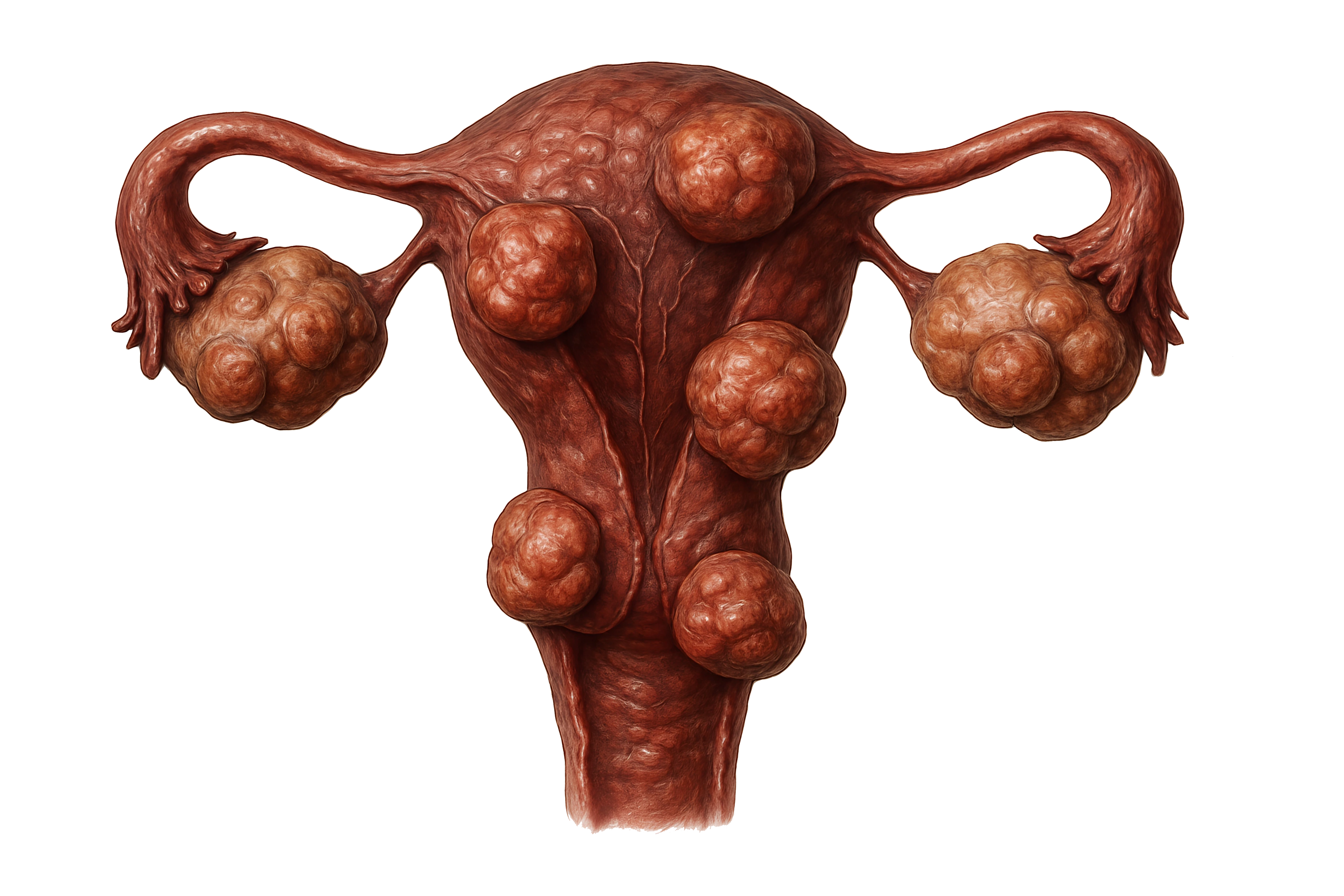
Think of a fibroid as a non-cancerous growth or tumor that develops from the muscle tissue of your uterus (womb). They can be as small as a seed or as large as a melon.¹,²

Image: Cross-section of the female reproductive system showing the common locations of fibroids
Where Do Fibroids Live?
Fibroids can grow in different locations in or on the uterus:³
• Inside the Uterine Wall (Intramural): These are the most common type and grow within the muscular wall of your uterus.³
• Outside the Uterus (Subserosal): These grow on the outer surface of your uterus and sometimes attach by a stalk (like a mushroom).¹
• Inside the Uterine Cavity (Submucosal): These grow just beneath the inner lining of the uterus and tend to cause the heaviest bleeding.³
Why Did I Get Them? (Causes and Risk Factors)
Doctors don't know the exact cause of fibroids, but we know two key things play a major role:
- Hormones: The female hormones Estrogen and Progesterone appear to fuel fibroid growth. This is why fibroids usually shrink after menopause, when hormone levels drop significantly.¹
- Genetics: If your mother or sister has fibroids, you are more likely to develop them too.²

Image: Exact cause is not known
How Do I Know If I Have Them? (Symptoms)
Many women have fibroids and never know it because they cause no symptoms. However, when symptoms do appear, they often include:¹
1 Issues with Menstrual Periods (Bleeding)
• Heavy Bleeding: Your periods are much heavier than they used to be, often soaking through pads or tampons quickly.¹
• Longer Periods: Your periods last for more days than a typical cycle.⁴
• Anemia (Low Iron): Due to the heavy bleeding, you might feel unusually tired, weak, or dizzy.¹
• Spotting: Bleeding between periods.⁵

Image: Issues with menstrual period
2 Pain and Pressure
• Pelvic Fullness: A feeling of heaviness or bloating in your lower abdomen, even when you aren't eating much.¹
• Cramping or Pain: Discomfort or pain during your period, which may be more intense than usual.⁴
• Pain During Sex (Dyspareunia): Fibroids can sometimes cause discomfort during intercourse.¹
3 Bladder and Bowel Issues
• Frequent Urination: Large fibroids can press against your bladder, making you feel like you need to pee all the time, even right after going to the bathroom.¹
• Difficulty Emptying Bladder: The pressure can sometimes make it hard to fully empty your bladder.⁶
• Constipation: If a fibroid presses on the rectum (the end of the large intestine), it can lead to difficulty passing stool.⁶
4 Other Issues
• Enlarged Abdomen: Very large fibroids can make your belly appear bigger, similar to being pregnant.²
• Backache: Pressure from fibroids can sometimes cause low back pain.²
• Fertility Issues: In rare cases, fibroids located inside the uterine cavity can interfere with getting pregnant or carrying a pregnancy to term.¹

Image: Enlarged abdomen
Treatment: What Are My Options?
The good news is that just because you have fibroids doesn't mean you need surgery. Treatment is only necessary if your symptoms are significantly affecting your quality of life.¹
a) Watchful Waiting (Monitoring)
If you have no symptoms or very mild ones, the best approach is often to simply monitor the fibroids over time. Since they shrink after menopause, this may be all you need.²
b) Medications (Managing Symptoms)
Medications primarily help control the symptoms, especially heavy bleeding:
• Pain Relievers: Over-the-counter drugs like ibuprofen.¹
• Iron Supplements: To treat or prevent anemia caused by blood loss.¹
• Hormonal Birth Control (Pills, IUDs, etc.): These can reduce bleeding and pain but do not shrink the fibroids themselves.¹

Image: Pills
c) Minimally Invasive Procedures (Shrinking or Removing)
These procedures can address the fibroids without major surgery:
• Uterine Fibroid Embolization (UFE): A tiny tube is guided to the blood vessels that feed the fibroid. Small particles are injected to block the blood supply, causing the fibroid to shrink and die.⁸
• Radiofrequency Ablation (RFA): Energy (heat) is used to destroy the fibroid tissue, causing it to shrink.⁹
d) Surgery (For Severe Symptoms)
Surgery is typically reserved for women with large fibroids or those who do not respond to other treatments:
• Myomectomy: A surgical procedure to remove only the fibroids while leaving the uterus intact.¹
• Hysterectomy: The surgical removal of the entire uterus. This is the only guaranteed cure for fibroids but means you can no longer get pregnant. It is often considered when fibroids are very large or when childbearing is complete.¹
The Takeaway: Fibroids are common, and you have many options for managing them. The best treatment for you depends on your age, the severity of your symptoms, and whether you plan to have children. Always discuss your full range of options with your doctor.¹

Image: Surgical Intervention
References
- MSD Manual Consumer Version. Uterine Fibroids. Website: msdmanuals.com
- UCSF Health. Fibroids. Website: ucsfhealth.org
- Cleveland Clinic. Uterine Fibroids: Causes, Symptoms & Treatment. Website: my.clevelandclinic.org
- Healthline. Uterine Fibroid Symptoms. Website: healthline.com
- National University Health System (NUHS). Uterine Fibroids. Website: nuhs.edu.sg
- Cardiovascular and Interventional Radiological Society of Europe (CIRSE). Uterine Fibroids Overview. Website: cirse.org
- RACGP. Uterine Fibroids: Investigation and Management. Website: racgp.org.au
- Smeets AJ, Nijenhuis RJ, van Rooij WJ, et al. Update on endovascular therapy for fibroids and adenomyosis. PubMed. Website: pubmed.ncbi.nlm.nih.gov
- Garza-Leal JG, Toub DB. Radiofrequency ablation of uterine fibroids. PubMed. Website: pubmed.ncbi.nlm.nih.gov

We Love to Educate for Free
But please do not self-medicate as wrong doses of even correct medications can cause serious complications like kidney failure and even death. You can talk to a LICENSED health professional (including medical doctors, specialists, physician assistants, clinical psychologists, nutritionists/dieticians, medical herbalists, etc) by downloading the Deluxe Hospital app here: